
 WINCH STRAPS
 RATCHET STRAPS
 E-TRACK STARPS
 BUNGEE STRAPS
 LIGHT WEIGHT TARPS
 TARP REPAIR KITS
 TRANSPORT CHAINS AND SNOW TIRE CHAINS
 RATCHET & LEVER BINDERS
 CHAIN HOOKS AND HARDWARE
 LOAD SUPPORT
 PLASTIC CORNER PROTECTORS
 V-CORNER PROTECTORS
 STEEL CORNER PROTECTORS
 CORNER PROTECTOR PLACEMENT
 OVERSIZE LOAD FLAGS & BANNERS
 SAFETY APPAREL & ACCESSORIES
 CAB RACKS
 TOOL BOXES
 GRILLE GUARDS
 WINCH SYSTEMS
 ACCESSORIES

Everything a flatbed driver needs to know from tarp types and flatbed tarp sizes to how to tarp a flatbed load the right way.
What Is a Flatbed Tarp and Why Does It Matter?
A tarped flatbed isn't optional on most hauls, it's the law. Unlike a dry van, a flatbed gives your cargo zero built-in protection. No walls. No roof. Just you, the load, and whatever weather shows up between pickup and delivery.
Tarping flatbed loads help protect your cargo from the rain, road debris,wind damages and UV exposure. It also keeps you DOT-compliant. An improperly covered tarped load can cost you delays, and damaged freight claims. None of those are cheap.
The problem most of the drivers run into isn’t whether to tarp, but which tarp and how to do it efficiently. Wrong type for the load, wrong size for the stack height, loose edges at 65 mph. Get any one wrong and you're re-doing it roadside or explaining yourself at a weigh station. This guide covers all of it.
Types of Tarps: Which One Goes on Which Load
Not all tarps for flatbed trucks are built the same. If you’re using the wrong type it could damage the cargo, shorten your tarp’s life and flag a DOT inspection. Here are the different types of tarps you need to know:
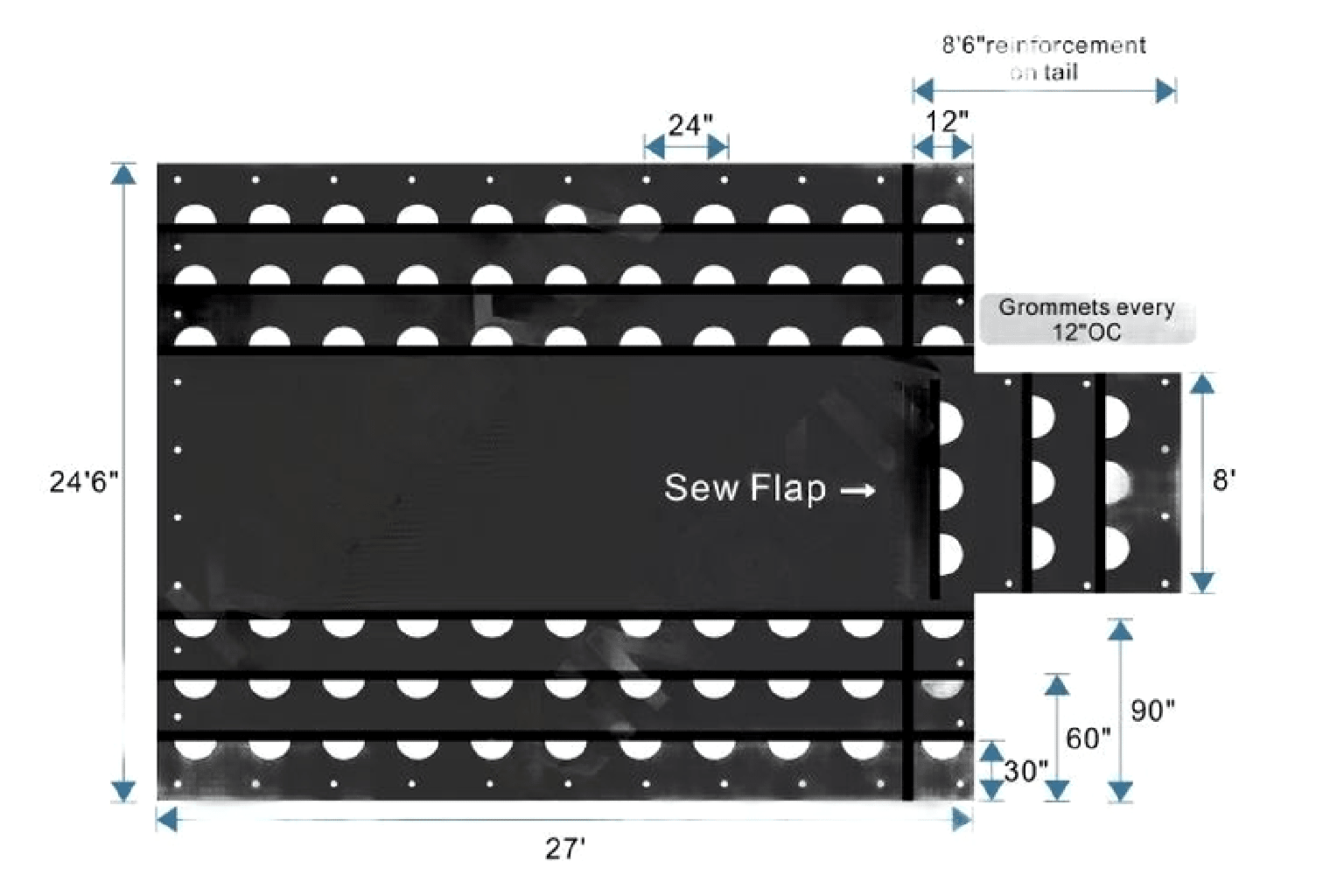
Lumber Tarps: It's the workhorse of flatbed tarping, built for finished lumber, drywall, wallboard, plywood and most palletized freight. The feature that sets them apart: an end flap. That panel folds down over the rear of the load and seals it completely, No lumber tarp, no full coverage on a stacked load.
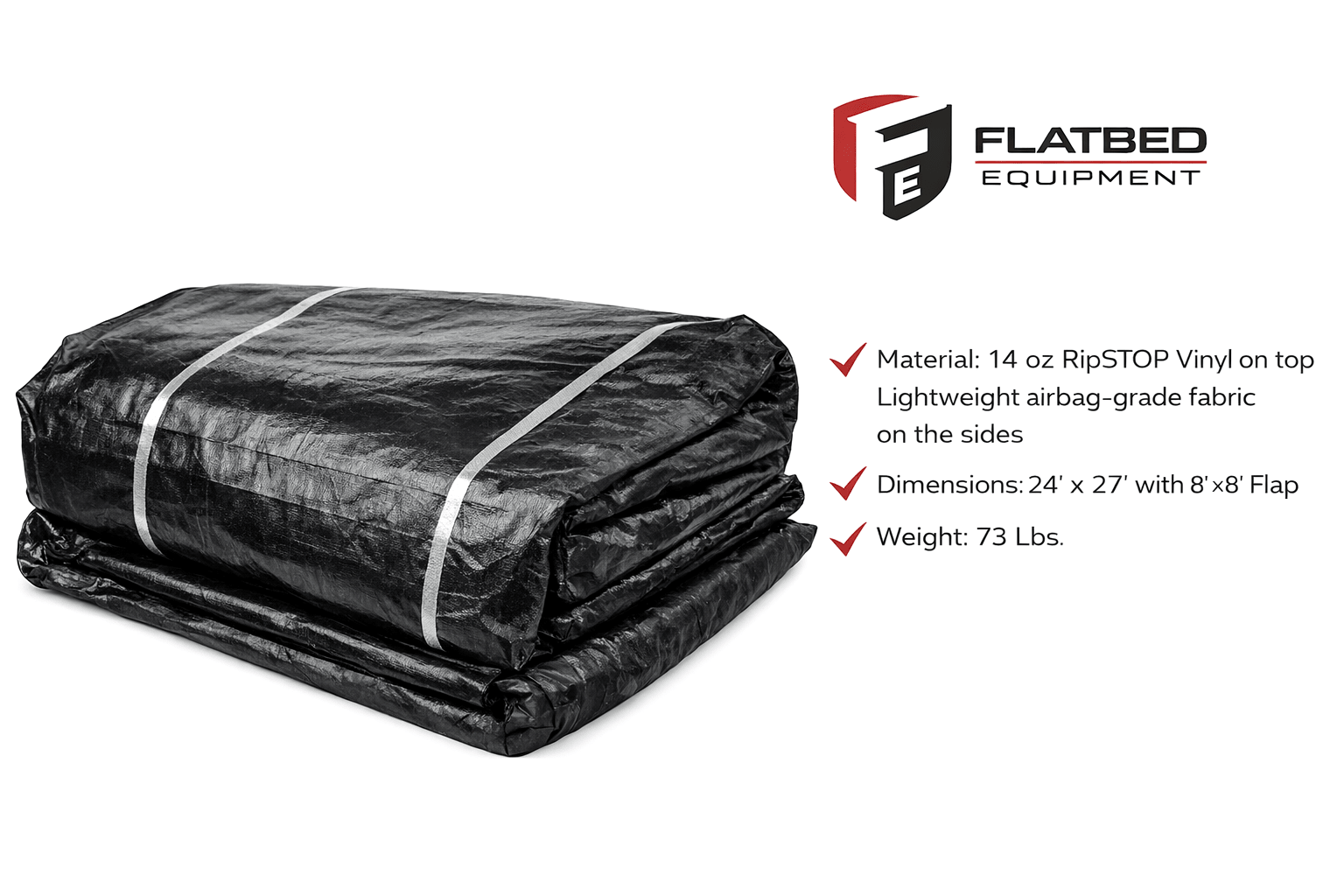
They come in three builds:
- Heavy duty (18oz ripstop) Maximum durability, reinforced stitching, heavy-duty D-rings. It’s built for years of hard use. Heavier to handle all the overhead. Comes in 16 x 27 (4 ft drop), 20 x 27 (6 ft drop), and 24 x 27 (8 ft drop). Pick your size based on the load.
- Ultra light (14oz ripstop) Lighter fabric, same coverage. Throws easier, folds faster, and doesn't wear you out by load three. Same three size options.
- Airbag / parachute fabric Lightest of the three. Strong for its weight, flexible in cold temps, easier on the back. Comes in 16 x 27 and 24 x 27, both with an 8 ft drop.
Coverage is the same across all three. What changes is the weight in your hands at the end of a long shift.
Coil Tarps: A fitted cover built for steel coil. Wraps around the coil; on all sides. Its standard size is 6' x 6' x 6' Running multiple coils means one tarp per coil.
Smoke Tarps: A small but important piece of kit. It has to go at the front of the load between the cargo and the cab. Keeps exhaust soot, road spray and debris off. They protect the front end from what hits first. Typically around 10 x 12 ft.
RGN Tarps: Built for over-dimensional loads on removable gooseneck trailers. Standard flatbed tarps won't cover an RGN load properly.They run bigger than a standard flatbed tarp,32x25 ft with a 12 ft drop, or 34x20 ft with a 13 ft drop. Permitted oversized freight needs this.
Flatbed Tarp Sizes: How to Figure Out What You Need
This is where most drivers get tripped up especially when figuring out what size tarp do I need for a specific load. The answer comes down to two things: load length and load height above the deck.
Understanding "Drop": The drop is just how far the tarp hangs down the sides of your load, and the most important number in any flatbed dimensions guide is understanding how to size a tarp. A 24 ft wide tarp with an 8 ft drop gives you 8 ft of coverage hanging down each side. That stops rain, road spray, and debris from getting in from the sides, not just the top. Get the drop wrong and the tarp is just a hat.
The Tarp Sizes Chart
| Size | Drop | Best For |
| 16' x 27' | 4 ft | Low stacks, lighter loads under 4 ft above deck |
| 20' x 27' | 6 ft | Mid-height loads, single-stacked pallets, shorter freight |
| 24' x 27' | 8 ft | Full-height loads up to the 13'6" legal limit industry standard |
| 32' x 25' | 12 ft | Over-dimensional RGN loads |
| 34' x 20' | 13 ft | Large RGN and permitted oversized freight |
The 24x27 with an 8 ft drop is the gold standard on flatbeds, the only size with complete side coverage on loads stacked to the legal limit of 13 '6". When in doubt, this is the tarp size for truck bed loads that won't leave you short at a weigh station.
For a standard 48-ft flatbed loaded with lumber, plan on using 2–3 tarps. One won't do it.
A Simple Rule: Match the drop to your load height above the deck. 4 ft high? 4 ft drop. 8 ft stack? 8 ft drop. Over 8 ft and you're into RGN tarp territory. Don't size down to save money; an exposed load costs way more than the right tarp.
How to Tarp a Flatbed Load: Step by Step
Knowing how to tarp a load on a flatbed comes down to sequence. Rush it and you'll be re-doing it on the side of the highway.
STEP 01 Inspect the Tarp First
Run a quick check before it goes near the load. Look for tears, worn grommets, cracked D-rings, or frayed edges. A tarp that fails at speed is a road hazard for everyone behind you. Damaged D-ring? Pull it from service.
STEP 02: Position the Tarp Over the Load
Center the tarp lengthwise over the load before opening it out. Shake it out flat; no folds, no twists. A twisted tarp cuts into cargo edges and loses coverage exactly where you need it.
STEP 03: Pull Front to Back First
Pull the tarp tight from front to rear before locking down the sides. On a lumber tarp, fold the end flap down over the rear now before the sides are secured so it sits clean underneath.
PRO TIP: Always tarp with the wind at your back, deploy it from the downwind side of the trailer. Let the tarp fall naturally with the wind. A tarp catching air while you're throwing it overhead is a wrestling match you don't need.
STEP 04: Secure the Sides Front to Back
Work down each side from front to rear. Hook your rubber tarp straps or bungee straps through the D-rings and connect to your trailer's stake pockets or side rails. Don't skip rings, all the unsecured section is a flap waiting to open at highway speed.
STEP 05: Check the Drop and Full Coverage
Walk the full length before you climb down. Check if the drops are even on both the sides and nothing has shifted. The tarped load needs to be fully sealed; top, both sides, and the rear end flap on lumber tarps. If it’s not sealed, it’s not done.
STEP 06: Tuck All the Tail
If you see any loose strap, excess webbing, or unsecured edge, get it tucked before you start moving. A loose tail at highway speed is a DOT violation and a hazard for drivers behind you. Thirty seconds of tucking saves a citation. No exceptions.
Common Tarping Mistakes to Avoid
Even experienced drivers cut corners here. These are the ones that show up at DOT stops:
Wrong tarp for the load. A coil tarp on a lumber stack won't give you end coverage. A lumber tarp over a coil won't wrap properly. You should match the tarp to the cargo, and that's the point of having different types of tarps.
Not enough drop. Too short a drop leaves the sides exposed. Rain and road spray hit from the sides at speed. If the drop doesn't reach, the tarp isn't doing its job no matter how tight the top is.
Skipping the pre-use inspection. A cracked D-ring or worn grommet might look fine from an arm's length. Under tension at speed, it fails. Just taking two minutes to check before every haul is the difference between a clean delivery and problem at the door front.
Tarping a wet load. Sealing moisture inside a tarped load speeds up damage especially on finished lumber. Dry or ventilate before covering. Trapped moisture is worse than leaving it open.
Loose edges and flapping tails. Unsecured tarp edges at speed are a DOT violation and a road hazard. Secure all the edges and tuck every tail. All the time.
Wrapping Up
Getting a tarped flatbed right comes down to three things: the right tarp type for your cargo, the right flatbed tarp sizes for your load height, and knowing how to tarp a load from inspection through to the final tuck. Get all those three right and every haul will takes care of itself.
If your tarps are worn out or wrong size, not suited to what you’re hauling, don’t wait until a DOT stop to sort it out.